

How to Sight-Read a Hymn on Short Notice
The text came at 8:47 on a Sunday morning: "Our organist is sick. Could you play today?" If you have served in a ward for any length of time, you have either sent that message or received it, and the person on the receiving end usually has about an hour to look at four hymns they may not have played in years.
What I have learned is that sight-reading a hymn well is not a gift some people are born with. It is a handful of habits, and most of them happen before your hands ever touch the keys.
Read the Hymn Before You Play a Single Note
When I open a hymn cold, I spend the first full minute just looking. I check the key signature and say it out loud, because the most common sight-reading mistake I hear in sacrament meeting is a missed sharp or flat that the player knew was there and forgot three measures later. Then I check the time signature and the metronome range printed above the music, and I find the shortest note value on the page, since that will tell me how fast I can really go.
Next, I scan for trouble. Accidentals, a fermata, a measure where the alto and tenor cross, a run of eighth notes in the bass. I am not trying to solve those spots yet. I just want to know where they are, so they do not ambush me in front of the congregation.
Finally, I read the text. That sounds like a step for the chorister, but the words tell you so much about how the music should move. A sacrament hymn and a rousing missionary hymn might share the same meter on paper, and they should not feel the same under your fingers.
Choose a Tempo the Hardest Measure Can Live With
Here is the rule I wish someone had told me at sixteen: your tempo is set by the hardest measure, not the easiest one. If you start at a lovely, flowing pace and then hit a measure of moving eighth notes you cannot manage, you will either stumble or slow down, and the congregation will drag behind you for the rest of the verse.
Before the meeting, find that hardest spot and play it a few times at the tempo you plan to use. If it falls apart, back the whole hymn down a notch. A steady, slightly conservative tempo will always serve the ward better than an ambitious one with hiccups. People sing out when they trust the organ.
If you have a little more time, the approach in my post on building a practice plan for learning a new piece before Sunday works on a smaller scale, even with just an hour.
Simplify the Score and Keep Going
A four-part hymn is really a small choir on the page, and when you are sight-reading, you are allowed to thin the choir. Nobody in the chapel is checking whether you played every tenor note. What they need is a clear melody, a solid bass, and a steady beat.
If the pedals are not comfortable for you yet, play the hymn on the manuals alone, with soprano and alto in the right hand and tenor and bass in the left, just as you would on the piano. If that is too much, drop the tenor before anything else. If a passage gets thick, protect the soprano line and the bass line first. Those two parts hold the hymn together. Everything in the middle is color, and color can be lighter on a short-notice Sunday.
When you are playing pedals, do not be afraid to play the bass line in long notes, holding one pitch through a measure where the written part moves. It keeps the foundation in place while your eyes stay up on the music, which is where they need to be.
A clear, supportive registration forgives small mistakes, too. My guide to organ registration that helps the congregation sing has combinations you can set in under a minute.
Above all, keep going. A wrong note lasts a fraction of a second. A stop to fix it lasts much longer and tells every person in the room that something went wrong. Keep your eyes moving one beat ahead of your hands, land on the next downbeat, and let the congregation carry you for a moment if they need to.
I find it helps to remember why we are there. The hymn is a prayer, and the congregation is singing to the Lord, not listening to a recital. Your job is to hold the door open so they can walk through it. That alone takes a lot of pressure off.
The best way to get better at all of this is to sight-read a little every week when nobody is depending on you. Pick music that is a step easier than what you usually play and read it through once without stopping. Our beginner organ and piano sheet music collection is a good place to start, and many of those arrangements make gentle, reverent preludes once you have them under your fingers. Then the next time that early Sunday text comes in, you will be ready to say yes.

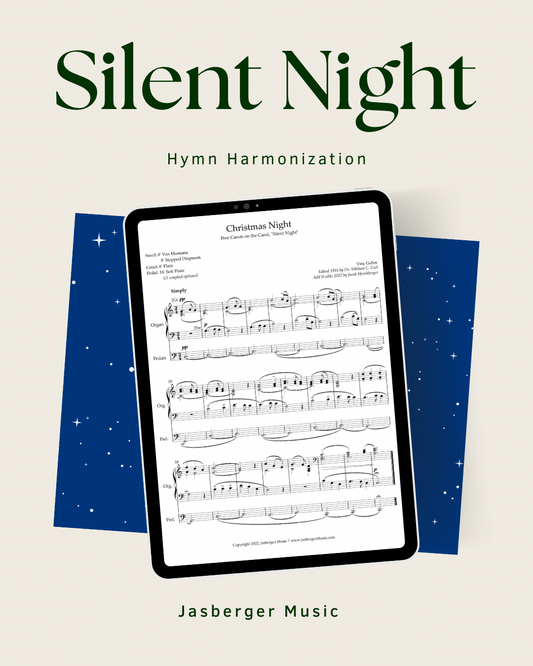
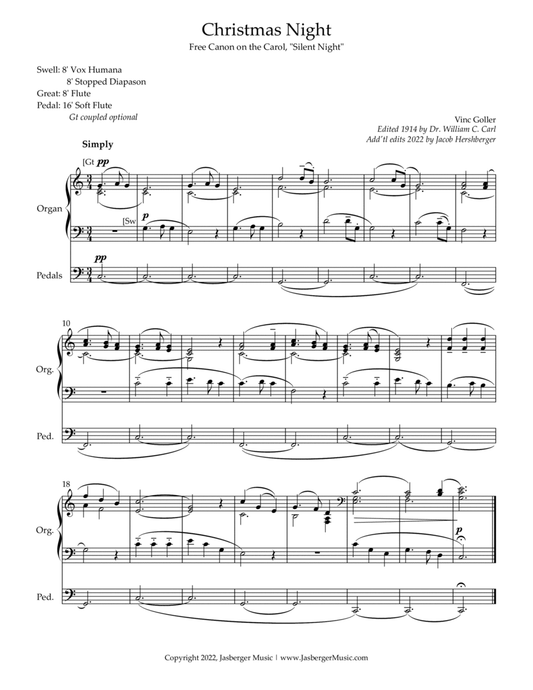
Silent Night Free Canon - Organ Sheet Music
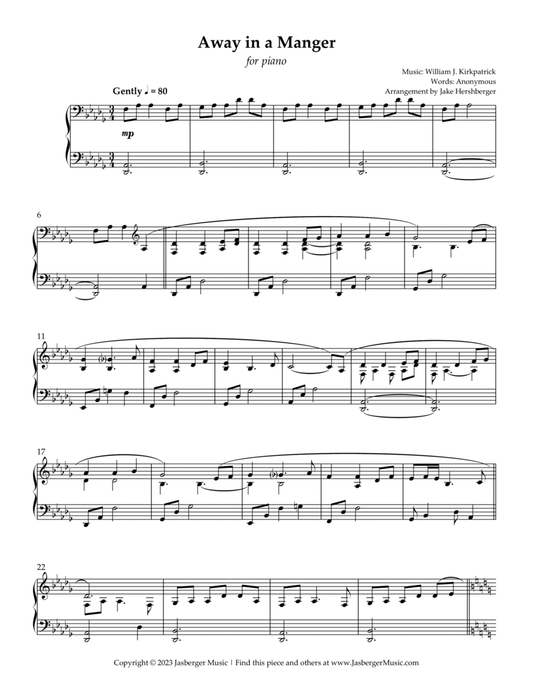
Away in a Manger Intermediate Piano Solo
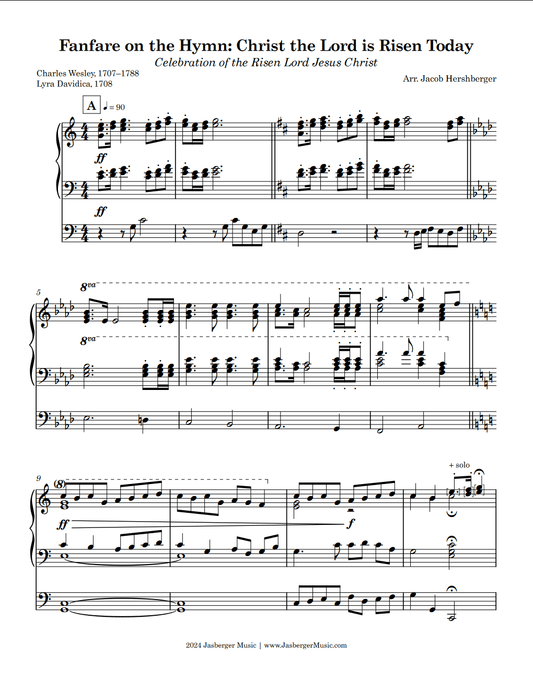
Christ the Lord is Risen Today – Easter Organ Fanfare
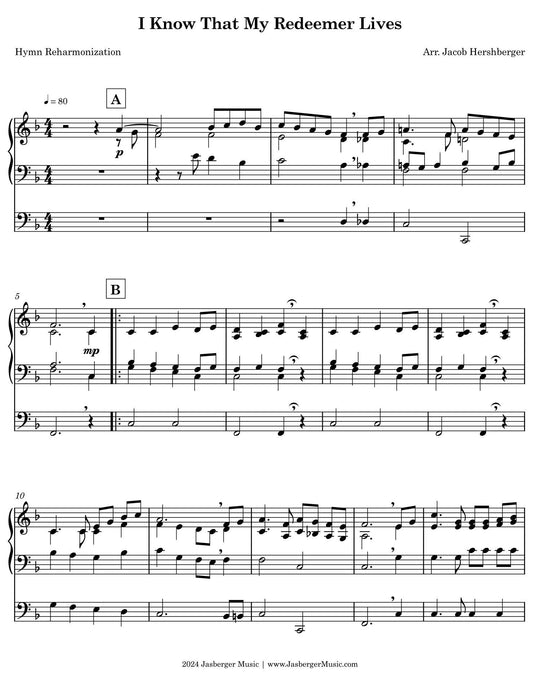

I Know That My Redeemer Lives – Organ Reharmonization
View Comments
Leave a Comment
No comments

I Need Thee Every Hour: A Piano and Organ Duet for Church

The Story Behind “Come, Thou Fount of Every Blessing”



comments