

How to Practice the Organ When All You Have Is a Piano
Most ward organists I know don't have an organ at home. We practice all week on a piano — the one in the living room, the one the kids take lessons on — and then show up early on Sunday for a few precious minutes at the actual instrument, hoping it all transfers. It doesn't, not the first time, and that gap between the kitchen piano and the chapel organ is where a lot of capable musicians quietly lose heart.
Here's the encouraging part: far more transfers than you'd think, as long as you practice the right things in the right way. You can do most of your preparation at the piano and save your short time on the bench for the things that genuinely need the organ itself.
Practice everything your hands do — just change how you touch the keys
The notes, the fingering, the coordination between your hands, the shape of every phrase — all of that lives in your fingers, and your fingers don't much care whether they're resting on a piano or a Rodgers. You can learn a hymn arrangement almost completely at home before you ever sit down at the organ.
The one thing you have to change is your touch. On a piano, the moment you strike a key the sound begins to fade, so pianists learn to lean on the sustain pedal to connect one chord to the next. The organ doesn't fade — it holds a note at full strength for as long as your finger stays down, and there's no sustain pedal to cover the seams. That means the connection between notes has to come entirely from your fingers. So when you practice at the piano, take your foot off the sustain pedal and make your fingers do the work: hold each note until the very instant the next one sounds, and not a moment longer. It feels awkward at first. It is also the single most valuable organ habit you can build on a piano.
While you're at it, get comfortable with finger substitution — quietly swapping one finger for another on a key you're already holding, so your hand can slide to the next chord without ever breaking the sound. Organists lean on this constantly, because we can't hide a gap under a pedal the way a pianist can. Pencil the substitutions into your music and drill them slowly until they're automatic. Do that all week at home, and your few minutes at the console on Sunday stop being a scramble and start feeling like a rehearsal.
Give the pedals a place at the piano too
The pedals are the part everyone assumes is impossible to practice without an organ, and it's true you can't actually play them on a piano. But you can still learn them. Set the music on the piano's rack and, while your hands play the manual parts, tap the pedal line with your feet on the floor — heel and toe, in real rhythm, following the markings in the score. It looks a little silly in the living room. It also teaches your feet where the notes fall and when, so that the first time you sit at the console your legs aren't starting from zero.
Better still is the oldest trick in the organ world: practice away from the keys entirely. Trace the pedalboard in your mind on the drive to church, or say the pedaling out loud while you follow the music. A surprising amount of pedal technique is simply knowing, without glancing down, how far apart the notes are and which foot goes where. That's mental work you can do anywhere.
Save your organ time for what only the organ can teach
When you finally do get to the building, don't spend that time learning notes you could have learned at home. Walk in with the piece already in your hands and the pedal line already in your feet, and use the console for the three things a piano simply cannot give you: the pedals under real resistance, the registration, and the sound of the room.
Pull your stops and listen to how they actually speak in that space — a combination that seemed lovely in your head can turn out too bright or too thin once it's filling the chapel. Play through the opening and the closing lines especially, since those are what the congregation remembers, and settle on registrations you can write down and trust. A short, focused session like that, resting on a week of honest piano practice, will do more for your Sunday than three frantic hours the day before ever could.
None of this requires owning an organ, or even regular access to one. It only asks you to practice with the organ in mind while your hands are on a piano — fingers carrying the legato, feet learning the pedals, your bench time guarded for what only the bench can teach. Do that, and you'll walk up on Sunday feeling ready instead of hopeful.
If you're gathering hymn arrangements and organ music worth preparing this way — pieces written by a working church musician for the instruments we really play on Sunday — browse the organ sheet music at Jasberger Music.


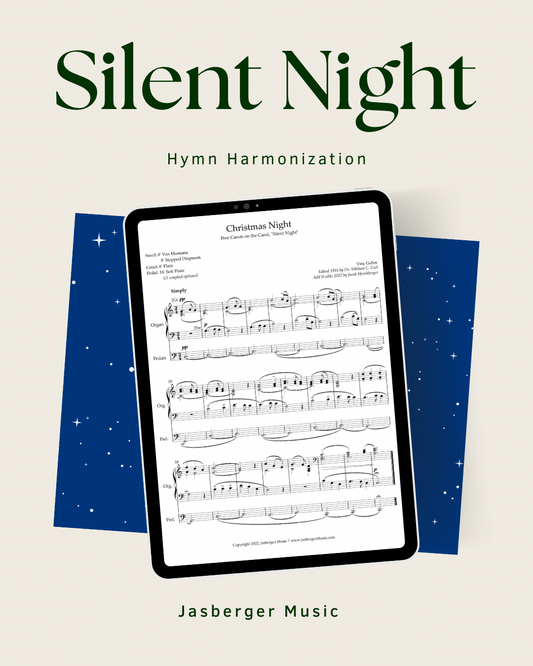
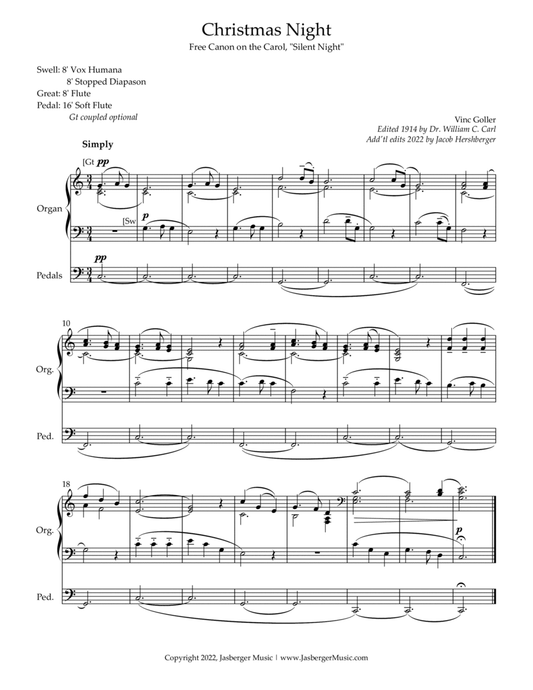
Silent Night Free Canon - Organ Sheet Music
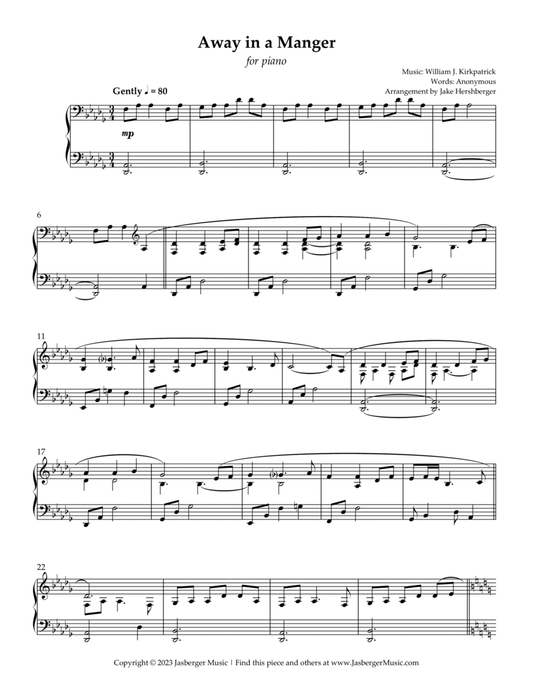
Away in a Manger Intermediate Piano Solo
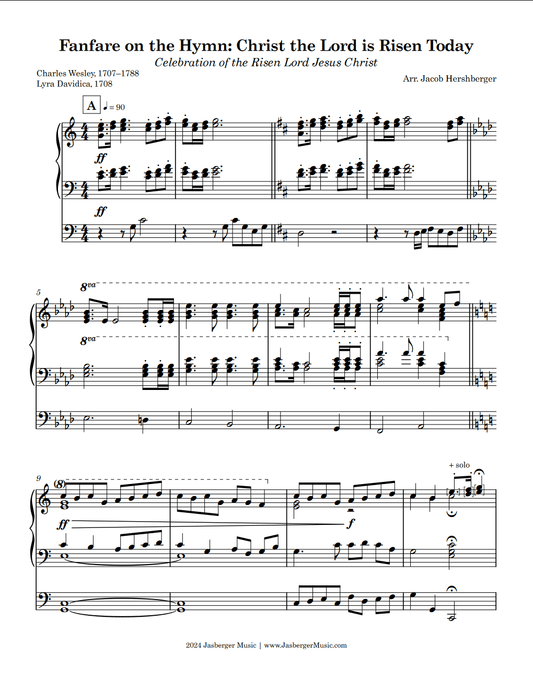
Christ the Lord is Risen Today – Easter Organ Fanfare
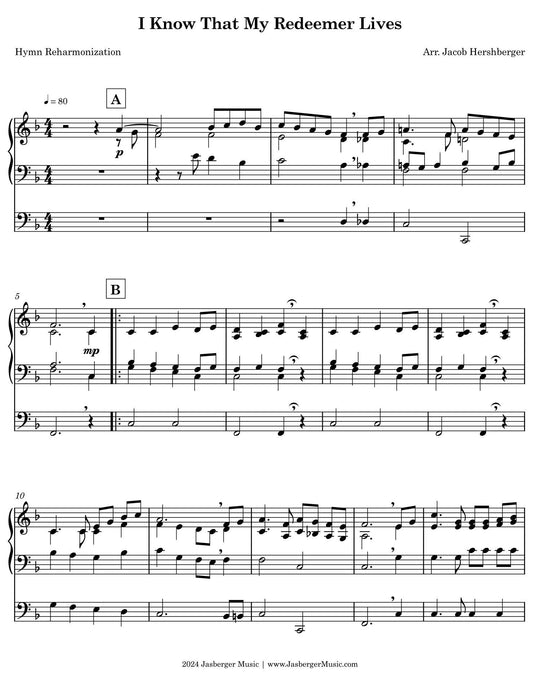

I Know That My Redeemer Lives – Organ Reharmonization
View Comments
Leave a Comment
No comments

How to Plan Prelude Music for Sacrament Meeting

How to Sight-Read a Hymn on Short Notice




comments