

How to Practice Hands and Pedals on the Organ
Every organist I know has lived this moment. Your hands learn a piece at home, your feet learn the bass line on Saturday, and the first time all three parts meet on the bench, the whole thing falls apart. That collapse rarely means the music is too hard. It usually means you practiced the parts and skipped the joints between them.
Organ music gives you three staves and asks four limbs to share them. For those of us who came to the bench from the piano, as so many ward organists do, the pedals are the newest skill we own, and they are the first to abandon us under pressure. November is when I start learning new music for December, so this is the routine on my mind right now. It works the same for a Christmas prelude as it does for next Sunday's closing hymn: build the piece in layers, and practice each layer at a tempo you can actually keep.
Start With the Pedal Line Alone
I learn the pedal line first, because it gets the least attention and carries the most weight. Everything above it depends on those notes arriving on time. Sit at the center of the bench, take your hands off the keys, and play the line slowly, with your eyes on the page instead of your shoes.
Finding notes without looking takes patience. The raised pedal sharps fall in groups of two and three, just like the black keys on a manual, and your foot can learn those groups and the gaps between them by feel, the way your fingers do. Your knees help too, since they learn how far apart the intervals sit. Decide early which foot takes which note, and whether a passage wants alternating toes or toe and heel, then write it down. My guide on how to mark your sheet music before Sunday shows the small pencil marks I use, and pedal choices are the ones I would least trust to memory.
If you are working from a four-part hymn, the bass line usually becomes your pedal line, with the soprano and alto in the right hand and the tenor in the left. When the bass moves too quickly, it is fine to play only the notes on the strong beats until your feet catch up. If the church is locked this week, you can still work on hand independence at home, and I wrote about that in how to practice the organ when all you have is a piano.
Practice Hand and Pedal Combinations in Order
Three parts make seven possible combinations, and I move through them on purpose: pedal alone, right hand alone, left hand alone, then left hand with pedal, right hand with pedal, both hands together, and finally everything at once. Most people jump from the third step straight to the seventh. The pairs in between are the joints, and joints are what break on Sunday.
Left hand with pedal usually exposes the most trouble, because the two lines sit close together and tend to pull each other along. If your left hand wants to move every time your foot does, this is the pairing that will teach it not to. Right hand with pedal gives you the outer voices, the melody and the bass, which is the frame a listener hears most clearly. When that pair feels steady, the piece begins to sound like music even before the inner parts arrive.
Work one phrase at a time, and let each practice section run a note or two past the end of the phrase so you rehearse the connection to the next one. Choose a tempo slow enough that the hardest measure never makes you stop, and keep that same tempo for every combination. When you stumble, resist the urge to go back to the beginning. Step down one layer, fix the problem there, and come back up.
Bring Hands and Pedals Together Before Sunday
Once all three parts hold together slowly, I raise the metronome a few clicks at a time, and only after I have played a phrase cleanly twice. I would rather arrive on Sunday a little under tempo and steady than up to speed and hoping. Congregations forgive a modest tempo far more easily than a line that stops.
Get at least one session on the instrument you will actually play. Pedalboards, bench heights, and key actions vary from building to building, and your feet learn distances that may shift at a different console. Adjust the bench, play the piece through without stopping, and notice what changes. Whatever falls apart there tells you exactly which layer to revisit.
Nobody in the chapel will ever hear these layers. They will hear a bass line that holds them up and a melody that feels unhurried, and they may never think about the organ at all. I have come to love that about this work. The patient hours on an empty bench become a quiet way of helping the Saints worship.
If you are looking for a new piece to try this on, browse my organ sheet music for worship and prelude. Many of these arrangements are written with beginning and intermediate organists in mind, so there is plenty of room to practice one layer at a time.

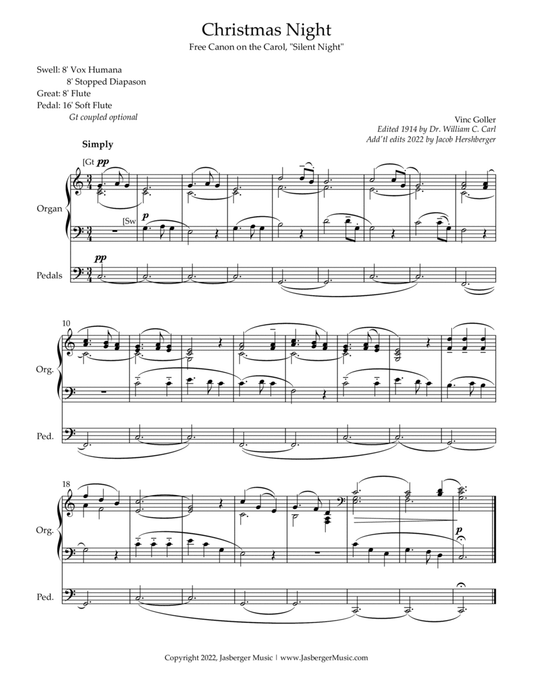
Silent Night Free Canon - Organ Sheet Music
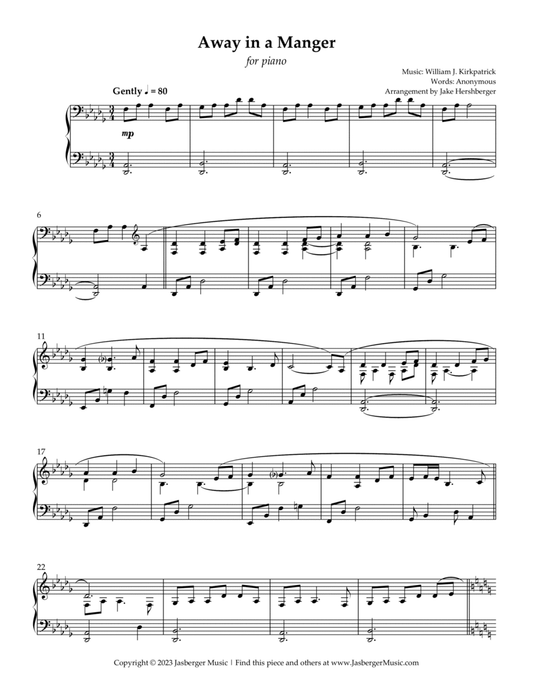
Away in a Manger Intermediate Piano Solo
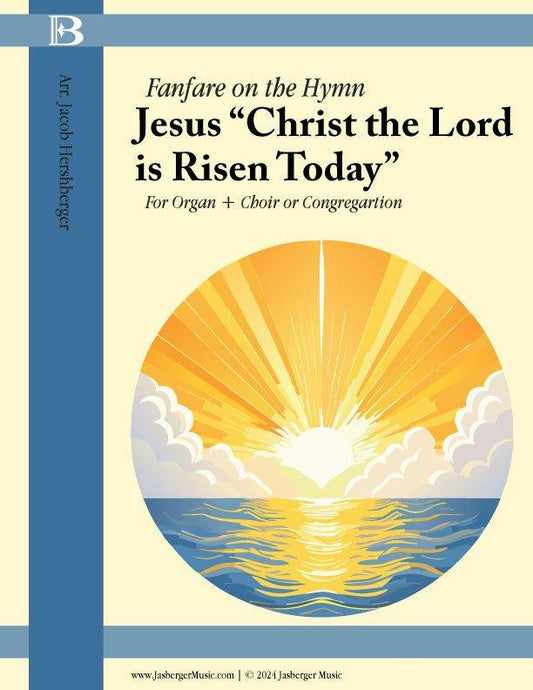
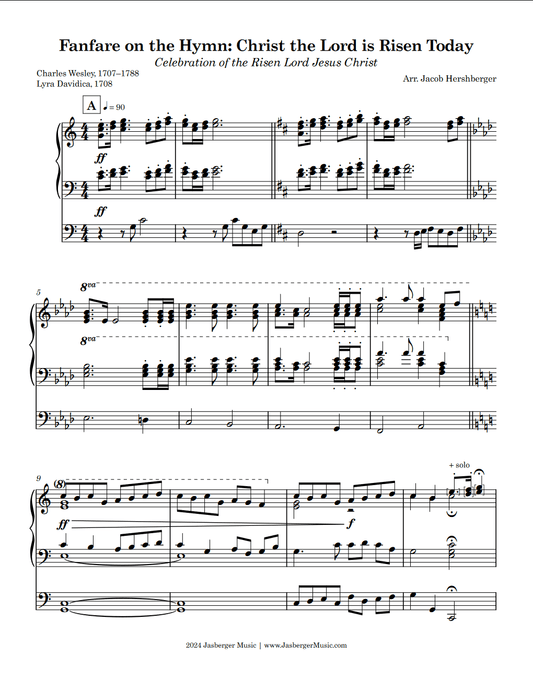
Christ the Lord is Risen Today – Easter Organ Fanfare
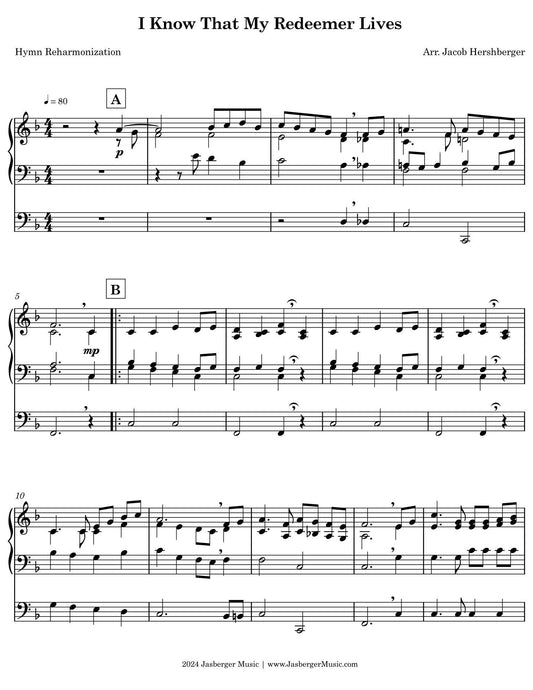

I Know That My Redeemer Lives – Organ Reharmonization
View Comments
Leave a Comment
No comments

Silent Night Free Canon: An Easy Christmas Organ Prelude

Now Let Us Rejoice: The Story Behind the Hymn




comments