

Away in a Manger: The Story Behind the Carol
Every December someone in the ward hums "Away in a Manger" to me in the hallway, and about half the time they're humming a different tune than the one in our hymnbook. That little mix-up is the best doorway I know into one of the most misunderstood carols we sing.
It is usually the first carol a child learns, and it's often the first one a new pianist plays in Primary. But for a song this simple, its story is full of guesswork, a famous name that doesn't belong, and two melodies that went their separate ways.
Who Really Wrote Away in a Manger?
For decades, "Away in a Manger" was printed as "Luther's Cradle Hymn." The legend was lovely: Martin Luther wrote it for his children, and German mothers had sung it to their babies ever since. You'll still see Luther's name on it in older hymnals and on plenty of Christmas programs.
The trouble is that nobody has ever found a German original. The earliest known printings are American. The carol turned up in newspapers first, and its first appearance in a songbook came in 1885 in Little Children's Book for Schools and Families, a Lutheran collection published in Philadelphia, with two stanzas and no author named. Our own hymnbook is honest about this: hymn 206 credits the text to "Anon., ca. 1883, Philadelphia."
The Luther story was already circulating in the mid-1880s, and it spread widely in 1887, when James R. Murray published the carol with his own new tune in Dainty Songs for Little Lads and Lasses under the title "Luther's Cradle Hymn." It may have been a sentimental guess, perhaps inspired by the 400th anniversary of Luther's birth in 1883. Either way, it stuck. It took a 1945 article by the music librarian Richard S. Hill, wryly titled "Not So Far Away in a Manger," to untangle the history for good.
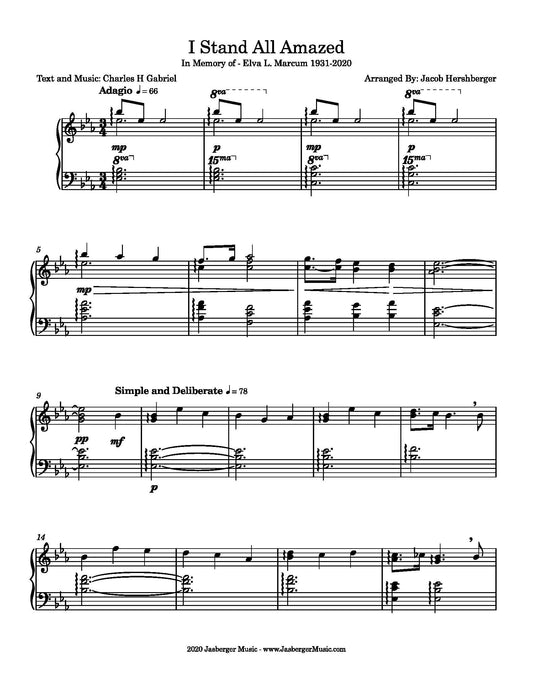
The third verse, the prayer that begins "Be near me, Lord Jesus," came later still. It first appeared in 1892 in a songbook compiled by Charles H. Gabriel, the gospel-song writer who also gave us "I Stand All Amazed." Its author is unknown. I find something fitting in that. The words children pray most often at Christmas were written by someone who never signed them.
Sheet music for this post
 Away in a Manger Intermediate Piano SoloInstant PDF download · $3.95Get the music
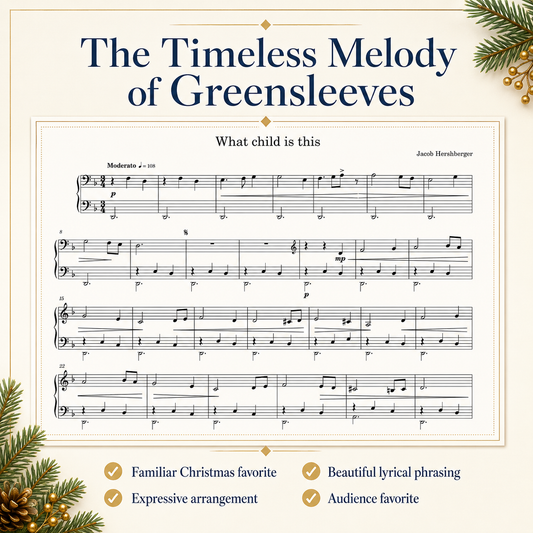
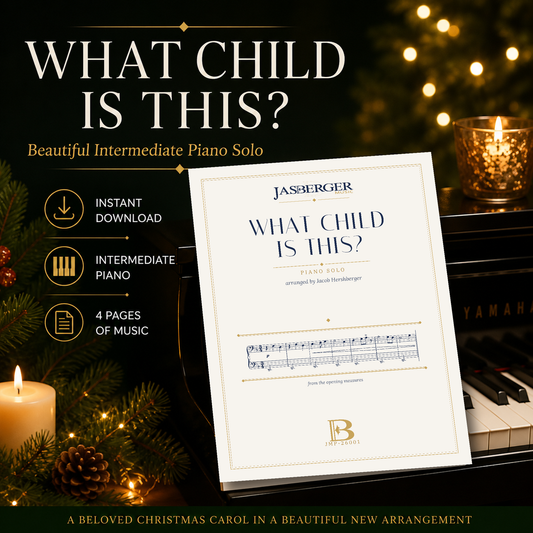
 What Child Is This – Piano Solo Sheet Music | Christmas ArrangementInstant PDF download · $3.99Get the music
 Silent Night Free Canon - Organ Sheet MusicInstant PDF download · $1.00Get the music
Why Away in a Manger Has Two Tunes
Here is where the hallway confusion comes from. Murray's 1887 melody, now called MUELLER, is the one most Americans grew up with. It rocks gently in three, and it's the version you'll hear on most Christmas albums.
In 1895 William J. Kirkpatrick published a second setting, CRADLE SONG. That tune crossed the Atlantic and became the standard in Britain, which is why many English choirs sound "wrong" to American ears. And it's the tune Latter-day Saints sing. Hymn 206 pairs the anonymous text with Kirkpatrick's melody, in a harmonization by Rosalee Elser.
So when a member of the bishopric asks for "the normal one," it's worth a quick conversation before Sunday. If the congregation is singing from the hymnbook, play Kirkpatrick. If a Primary class is performing, check which version their leader taught, because many children learn Murray's tune at school or at home.
Playing Away in a Manger in Sacrament Meeting
Because it's a lullaby, this carol is easy to over-play. On the organ I keep it on soft flutes, maybe an 8' and 4' together on the Swell, with the pedal light or even left out on the first verse. On the piano I let the left hand rock, not pound. Think of a parent singing over a cradle, not a choir filling a cathedral.
It also makes a tender piece of prelude. Two or three verses at a slow tempo, played without fuss, set a Christmas tone before the meeting begins. If you're building a December prelude list, my notes on planning prelude music for sacrament meeting walk through how to pace one, and my easy Silent Night canon for organ pairs well beside it.
What moves me most about this carol is how little it needs to be famous. No celebrated author, no single melody, just a few plain lines a child can sing: the cattle lowing, the baby waking, and a prayer to stay near. That's a good reminder for those of us at the bench, too. Our job isn't to impress anyone. It's to help the congregation come close to the Savior for a few quiet minutes.
If you'd like to play it as a gentle recital-style piece this season, my Away in a Manger intermediate piano solo passes the melody between the hands and keeps the ending unhurried. You'll find more carols for both instruments in my Christmas sheet music collection.

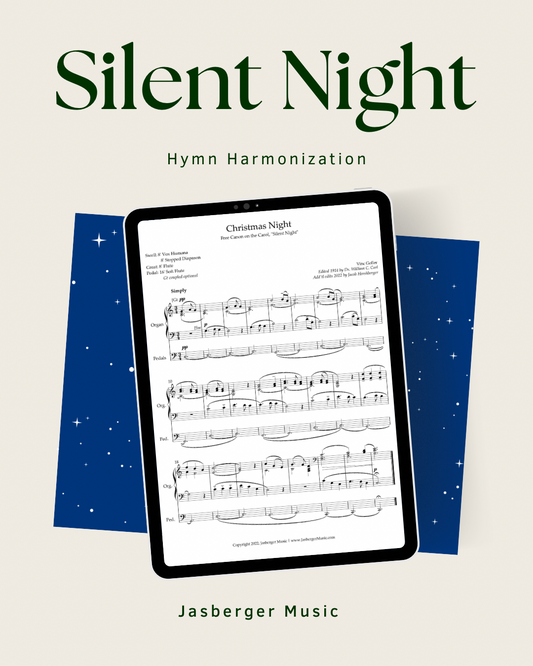
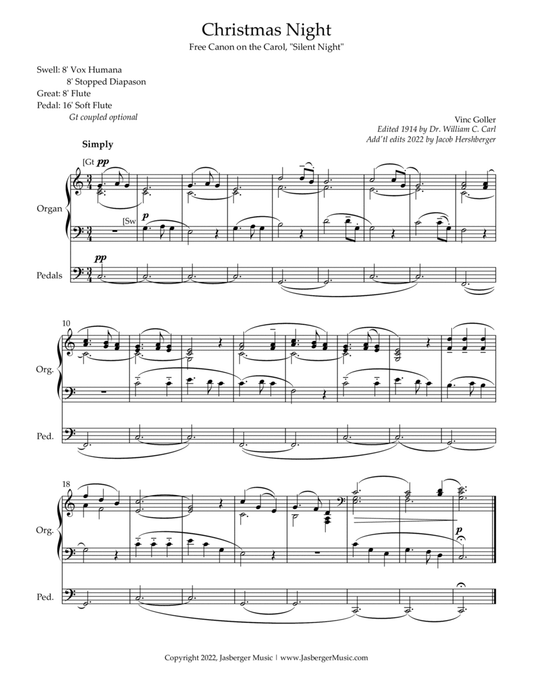
Silent Night Free Canon - Organ Sheet Music
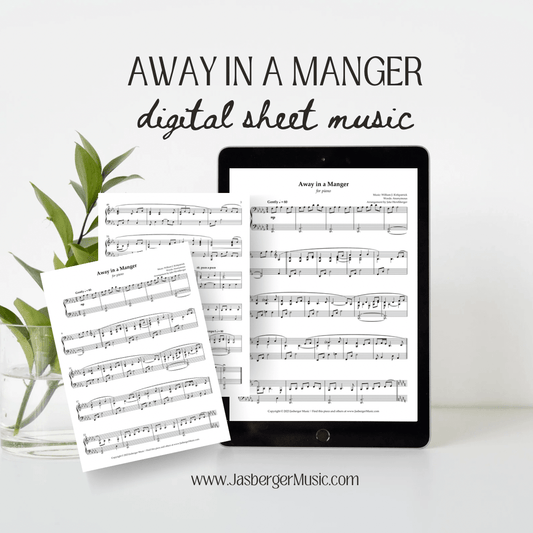
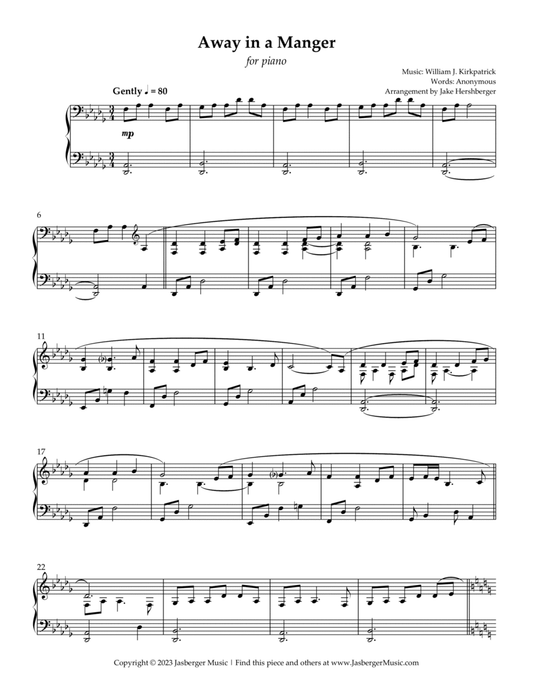
Away in a Manger Intermediate Piano Solo
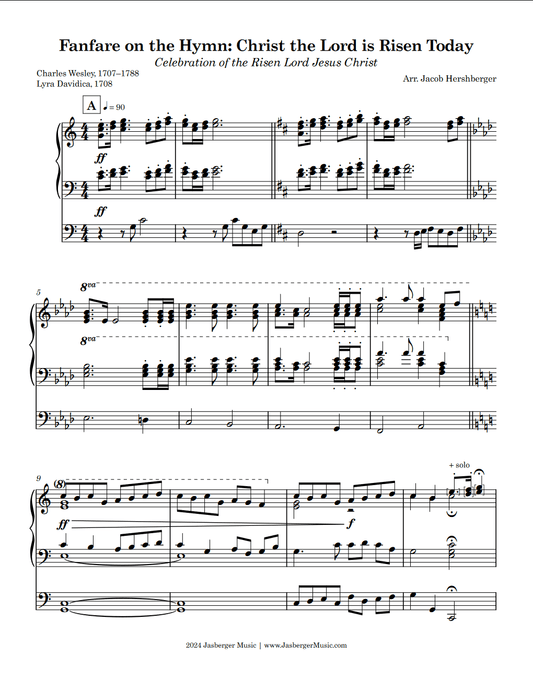
Christ the Lord is Risen Today – Easter Organ Fanfare
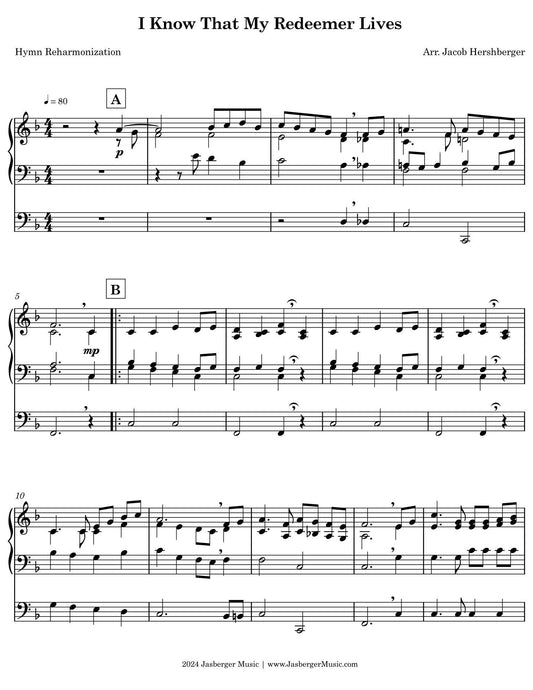

I Know That My Redeemer Lives – Organ Reharmonization
View Comments
Leave a Comment
No comments

Working With Your Ward Chorister: An Organist's Guide

How to Practice Hands and Pedals on the Organ




comments