

The Boldest Stop on the Organ: Meet ‘Dance of the Trumpet’
Most every organ console has one stop that organists quietly tiptoe around. It's the trumpet — bold, brassy, and bright enough to fill the whole room — and on a typical Sunday it sits there untouched while we reach, one more time, for the gentle flutes and soft strings.
I understand the instinct completely. A trumpet stop in the wrong moment can feel like raising your voice in a quiet room, and on Sunday reverence matters far more than showing off. But a color that beautiful shouldn't spend its entire life in hiding. There are moments in the life of a congregation when bright and joyful is exactly the right thing — and that conviction is what led me to write Dance of the Trumpet.
A piece that isn't a hymn
Most of what I arrange is built to serve a hymn text: a prelude that sets a reflective tone before the meeting, or a reharmonization that lets a familiar tune land in a fresh way. Dance of the Trumpet is a different animal. It's an original, energetic recital piece written specifically around the organ's trumpet stop — not a hymn dressed up, but a showpiece built from the ground up to let that one voice sing.
The writing sets a crisp, dancing solo line over a rhythmic accompaniment, so the trumpet gets to do what it does best: carry a tune with confidence and a little sparkle. I kept it at an intermediate level on purpose. You don't need conservatory technique to play it — if you can manage a moderately busy hymn, you can bring this to life — and yet it sounds far harder than it actually is, which is exactly what you want from a postlude or a recital opener.
Where a showpiece belongs on a Sunday
If you serve as a ward organist, you already know that most of the meeting calls for restraint. But there is one moment that's allowed to be celebratory: the postlude. After the closing prayer, when families gather their children and start visiting in the aisles, the organ gets to send everyone out into the day. A bright, dancing trumpet tune does that beautifully — it lifts the room without interrupting anything sacred.
Beyond Sunday, this is the kind of piece that earns its keep at a recital, a fireside, a stake organ demonstration, or any time you want to remind a congregation that the organ can do more than accompany. Reverence and joy were never opposites. A well-placed showpiece reminds people that the instrument they hear every week has a whole other range of color waiting inside it.
Finding the right trumpet on your instrument
Half the fun of a piece like this is hunting for the right sound on your own organ. On a pipe organ, start with the Trumpet 8′ on the Swell or Great; if you are lucky enough to have a festival trumpet or a Trompette-en-chamade, use it — but use it sparingly. Those stops are thrilling for about eight bars and exhausting after thirty. On the Allen and Rodgers organs you'll find in most meetinghouses, the trumpet usually lives on the Swell, and it shines when you play the tune there against a light 8′-and-4′ foundation on the Great, so the melody floats clearly on top.
The goal is to treat the trumpet as a true solo: melody on one manual, accompaniment on another, and let the listener hear that line stand out. And if your trumpet is simply too fierce for your room — some of them are — reach for an oboe or a softer reed instead. You'll keep all the dancing character with a little less edge.
So the next time you sit down to practice, pull out the stop you've been avoiding and let it stretch its legs. You might be surprised how good it feels to play something bold for a change.
If you'd like a piece written to do exactly that, you'll find Dance of the Trumpet — along with a growing library of organ preludes, hymn reharmonizations, and recital music — in the Jasberger Music catalog at jasbergermusic.com.


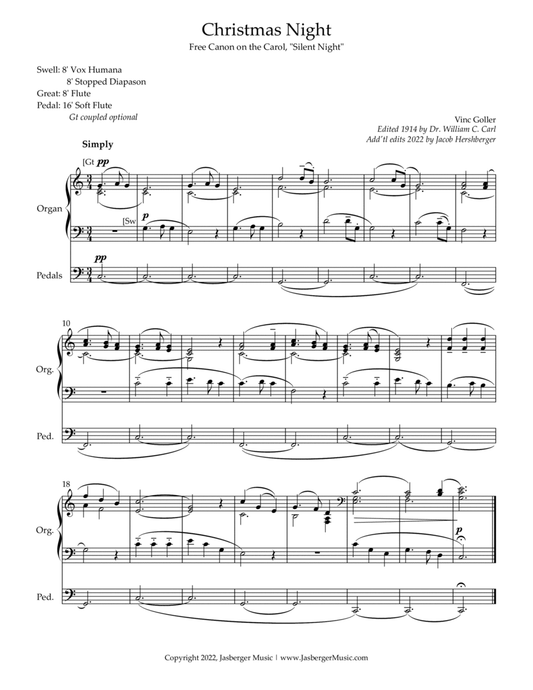
Silent Night Free Canon - Organ Sheet Music
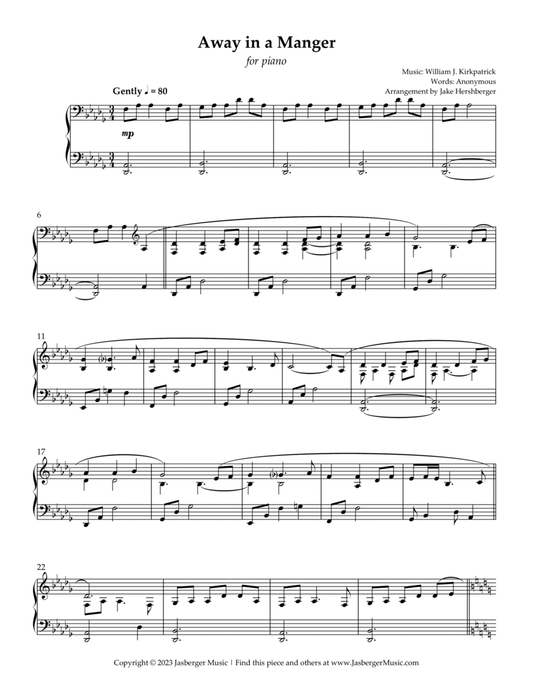
Away in a Manger Intermediate Piano Solo
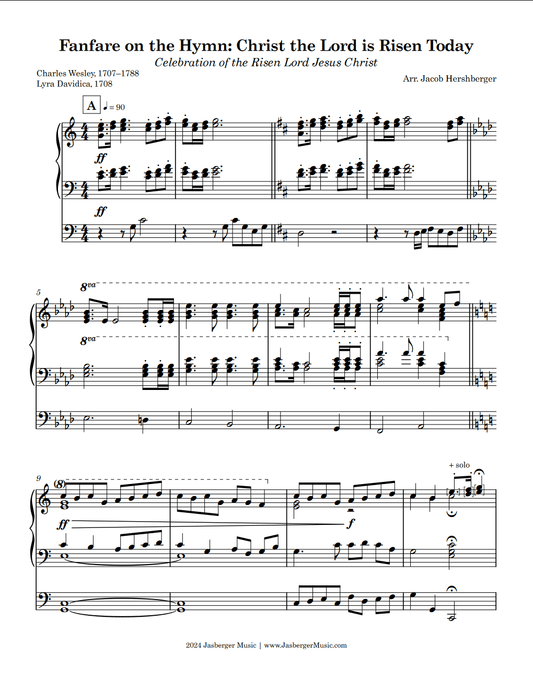
Christ the Lord is Risen Today – Easter Organ Fanfare
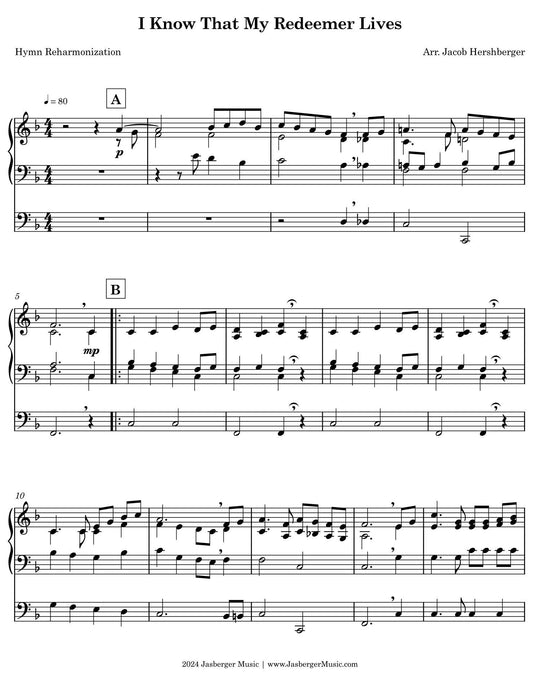

I Know That My Redeemer Lives – Organ Reharmonization
View Comments
Leave a Comment
No comments

How to Play a Hymn Introduction the Congregation Can Follow

How to Practice the Organ When All You Have Is a Piano


comments