

What Child Is This: A Christmas Piano Solo Arrangement
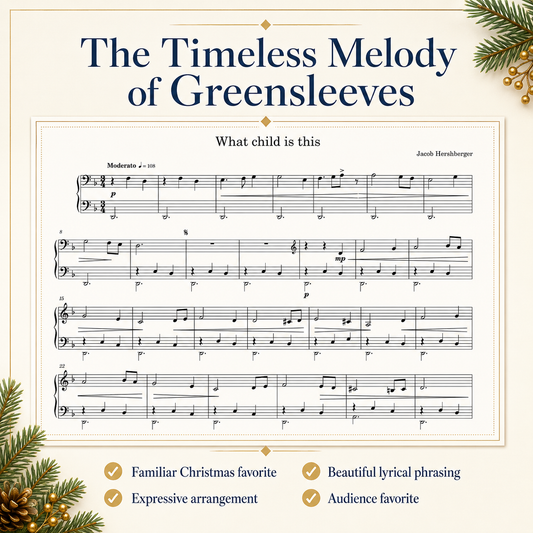
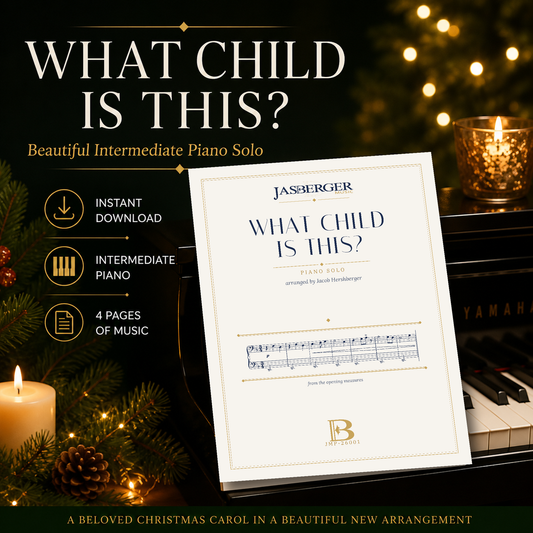
Every December someone in my ward leans over the organ bench after sacrament meeting and asks, "Do you have anything for piano that isn't just the hymn?" For a long time my honest answer was to play the hymnbook harmony a little slower and hope nobody noticed. My What Child Is This piano solo is the arrangement I finally wrote so I would have a better answer.
It has become an even better fit this year. "What Child Is This?" now appears in Hymns—For Home and Church as number 1203, so many Latter-day Saint congregations will be singing it this Christmas. When a carol is fresh in the congregation's ears, a piano setting of it in prelude or as a musical number lands with real warmth. People recognize it within a few notes, and then they start listening.
A Carol Built Around a Question
The words come from William Chatterton Dix, a Victorian Englishman who spent his working life in marine insurance in Glasgow and wrote hymn texts on the side. (He also gave us "As with Gladness Men of Old.") His poem was paired with the old English tune GREENSLEEVES in John Stainer and Henry Bramley's collection Christmas Carols New and Old around 1870, and the two have been inseparable ever since. The tune itself was already centuries old by then: a ballad about the "Lady Greensleeves" was registered with London's Stationers' Company in 1580.
What I love about Dix's text is its shape. The verse asks a question, almost in the voice of a puzzled shepherd: who is this child, sleeping on Mary's lap, greeted by angels while shepherds keep watch? Then the refrain answers it plainly: this is Christ the King. Question, then answer. Wonder, then witness. It is a small sermon in a single verse, and it fits Luke 2 beautifully.
If you enjoy the backstories of the carols we sing, I wrote about another favorite in the story behind Away in a Manger. Many of these carols came from ordinary believers, not famous composers, who simply wanted to say something true about the Nativity.
Sheet music for this post
 What Child Is This – Piano Solo Sheet Music | Christmas ArrangementInstant PDF download · $3.99Get the music
 Bring a Torch, Jeanette Isabella - Piano Solo Sheet MusicInstant PDF download · $3.95Get the music
How the Arrangement Answers the Question
When I sat down to arrange this carol for piano, I kept coming back to that question-and-answer structure. So that is how the piece is built. The right hand carries the familiar melody, and instead of plodding along with blocked chords, the left hand answers with a melodic voice of its own. The two hands talk to each other. It feels less like a hymn with accompaniment and more like a conversation at the manger.
As the arrangement goes on, that conversation deepens. Near the close I lean on some Baroque counterpoint, letting the voices overlap and imitate one another, so the ending carries a sense of gravity and wonder rather than simply getting louder. GREENSLEEVES is a minor-key tune, and I wanted the arrangement to honor that tenderness instead of covering it with glitter.
It sits at an intermediate level. If you can play the hymns comfortably and have worked through a few classical pieces, you can learn it before Christmas. My best practice advice: learn the left hand alone as if it were the melody. Sing it, shape it, give it its own phrasing. Once your left hand believes it has something to say, putting the hands together becomes far easier, and the balance between the voices takes care of itself. I laid out a week-by-week approach in my four-week plan for learning a Christmas prelude; it was written for organists, but the same schedule works well for this piano solo.
Where It Fits in a Christmas Sacrament Meeting
I wrote this one to be equally at home in a worship service and a recital. In sacrament meeting it works as prelude music while the congregation settles, or as a special musical number between speakers on the Sunday before Christmas. Because the melody is so recognizable, it gently prepares hearts for a Christmas talk without drawing attention to the pianist. At a ward Christmas devotional or a student recital, the contrapuntal ending gives the pianist something satisfying to dig into.
If you are building a whole Christmas set, pair it with something brighter. My Bring a Torch, Jeanette Isabella piano solo is an energetic old French carol with a dancing right hand, and the two make a lovely contrast: one asks a quiet question in a minor key, the other runs to the stable with a lantern in hand.
However you use it this season, I hope it helps the people listening ask Dix's question for themselves, and then hear the answer. You can find this arrangement and the rest of my seasonal pieces in the Christmas sheet music collection.

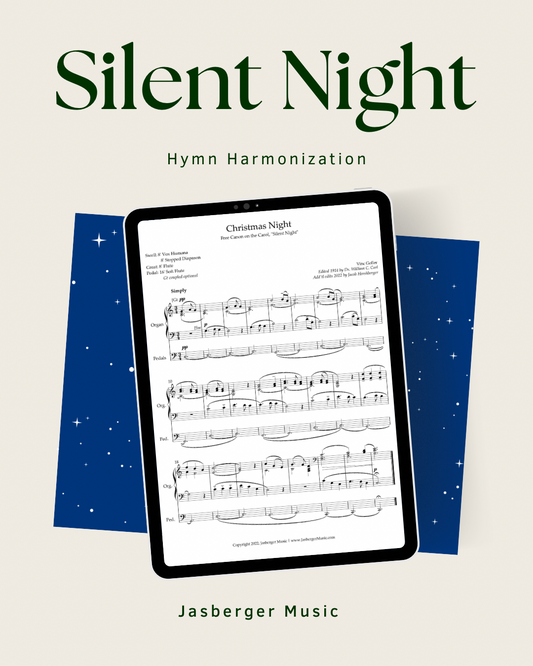
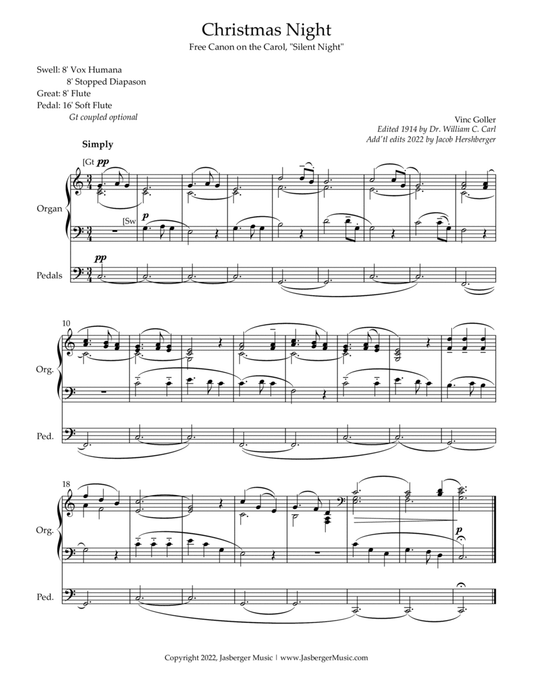
Silent Night Free Canon - Organ Sheet Music
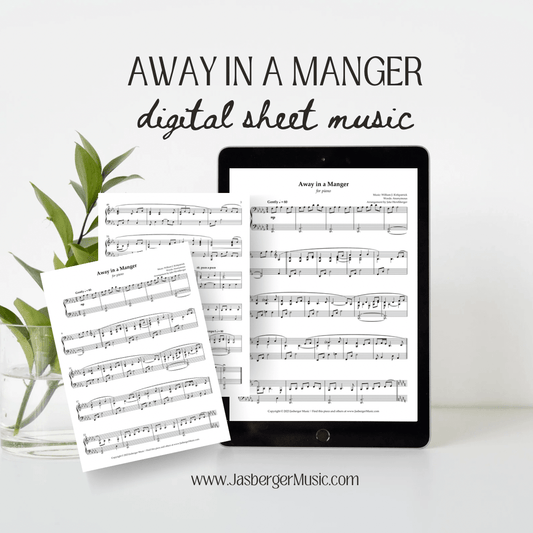
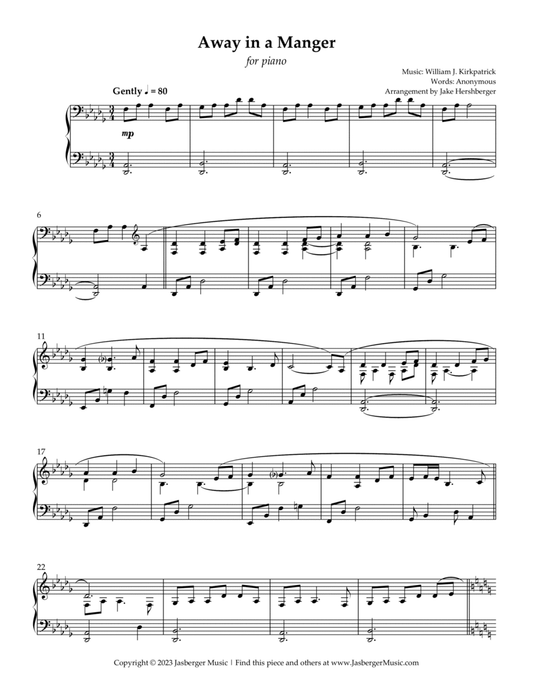
Away in a Manger Intermediate Piano Solo
Christ the Lord is Risen Today – Easter Organ Fanfare

I Know That My Redeemer Lives – Organ Reharmonization
View Comments
Leave a Comment
No comments

Learn a Christmas Organ Prelude in Four Weeks

Away in a Manger: The Story Behind the Carol



comments